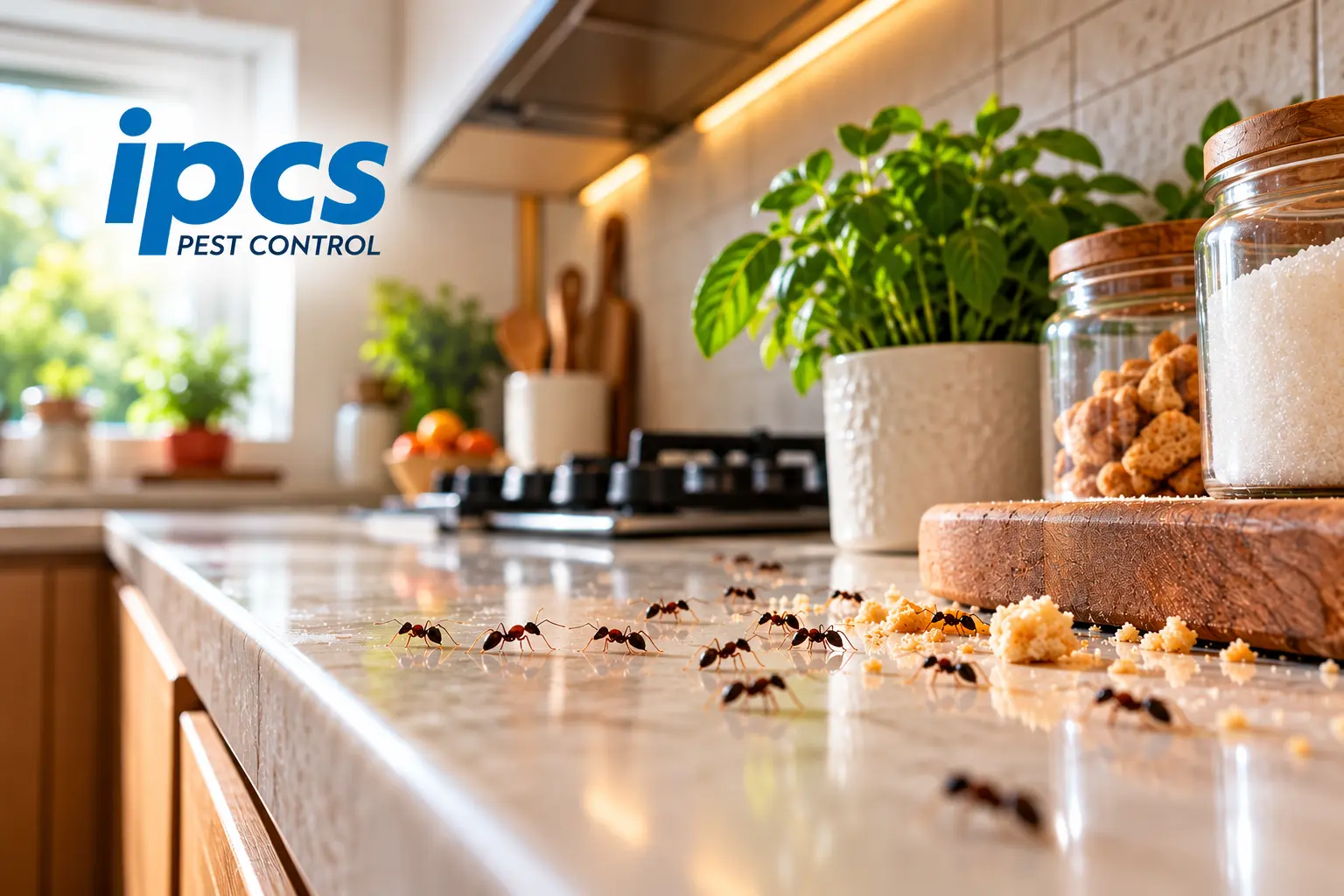
Finding a line of tiny ants moving across your kitchen counter or floor can seem like a minor household problem. But when ants start appearing regularly, it usually means they have found a reliable source of food, water, or shelter inside or around your home.
In Jaipur homes, ants can enter through very small gaps around doors, windows, walls, plumbing lines, and other openings. Simply wiping away the visible ants may provide temporary relief, but it does not always solve the underlying problem.
Understanding where ants are coming from and what is attracting them can help you prevent a larger infestation.
Why Do Ants Keep Coming Inside Your Home?
Ants are constantly searching for food, water, and suitable places to establish their colonies. Even small amounts of spilled food, sugary substances, crumbs, or moisture can attract them.
Common reasons ants enter homes include:
- Food crumbs and spills
- Sugar, sweets, and other exposed food
- Moisture around sinks and bathrooms
- Uncovered dustbins
- Cracks and gaps around doors and windows
- Leaking pipes or taps
- Plants and vegetation close to the building
Once worker ants find a dependable food source, they can leave a chemical trail that helps other ants follow the same route.
Common Entry Points for Ants
1. Gaps Around Doors and Windows
Small gaps underneath doors or around window frames can provide an easy route inside. Ants are tiny enough to pass through openings that may not seem significant to homeowners.
Check door frames, window corners, and damaged seals if you repeatedly notice ants entering from the same area.
2. Cracks in Walls and Floors
Small cracks around walls, floors, skirting boards, and corners can become entry points for ants. Some species may also establish nests in wall cavities or other protected spaces.
Sealing unnecessary cracks can help reduce the number of routes available to ants.
3. Kitchen Cabinets and Countertops
Kitchens are particularly attractive to ants because they provide easy access to food and water.
Pay attention to areas around:
- Sugar and food containers
- Kitchen cabinets
- Sinks
- Appliances
- Dustbins
- Countertop corners
- Food storage areas
Keeping food properly sealed and cleaning spills quickly can make the environment less attractive to ants.
4. Plumbing and Moisture-Prone Areas
Ants may also be attracted to moisture around sinks, bathrooms, utility areas, and leaking pipes.
If you notice ants repeatedly around a sink or plumbing fixture, fixing the moisture problem should be part of the solution rather than simply treating the visible ants.
5. Outdoor Plants and Vegetation
Ants living around plants, garden areas, walls, or other outdoor spaces may eventually find their way indoors.
Branches touching walls, excessive vegetation close to windows, and organic debris around the property can provide shelter and pathways for ants.
How to Stop Ants From Entering Your Home
A few simple habits can reduce ant activity:
Keep food sealed: Store sugar, snacks, grains, and other food products in tightly closed containers.
Clean spills quickly: Even a small amount of sugary liquid can attract ants.
Keep surfaces clean: Regularly clean kitchen counters, floors, and areas underneath appliances.
Fix water leaks: Repair leaking taps and pipes and keep moisture-prone areas dry.
Seal entry points: Close cracks and gaps around doors, windows, walls, and plumbing openings.
Manage outdoor areas: Keep plants trimmed and avoid unnecessary vegetation directly against exterior walls.
These steps can help with minor ant activity. However, if ants continue appearing despite regular cleaning and prevention, there may be a colony or established nesting point nearby.
When Should You Consider Professional Ant Control?
Seeing a few ants occasionally does not necessarily mean you have a major infestation. However, professional treatment may be worth considering when you notice large numbers of ants, repeated trails, ants appearing from walls or cracks, or activity returning after cleaning and DIY treatment.
Professional pest control focuses on identifying the source of the infestation rather than only removing the ants that are visible.
A proper inspection can help determine:
- Where ants are entering the property
- Which areas are attracting them
- Whether there is an active nesting site
- Which treatment approach is appropriate
- What preventive measures can reduce future activity
For persistent infestations, homeowners looking for ant control in Jaipur can consider professional treatment instead of repeatedly relying on household sprays.
Professional Ant Treatment in Jaipur
When ant activity becomes difficult to manage, professional treatment can provide a more targeted approach. The treatment method may depend on the type of ant, location of the infestation, level of activity, and conditions around the property.
IPCS Pest Control provides professional Ant Control Services in Jaipur for residential and commercial properties. The approach focuses on identifying pest activity and applying suitable treatment to help control the infestation.
Professional ant treatment can be especially useful when ants continue returning to the same areas despite regular cleaning and preventive measures.
Don’t Ignore Repeated Ant Activity
A few ants on the kitchen counter may look harmless, but repeated activity can indicate that ants have established a regular route into your home.
Keeping food sealed, controlling moisture, cleaning regularly, and closing potential entry points can help prevent problems. If the activity continues or becomes widespread, identifying the source and addressing the infestation professionally can be a more effective long-term approach.
For homeowners dealing with persistent ant problems, professional ant treatment in Jaipur can help identify the cause and control the infestation before it becomes more difficult to manage.
IPCS Pest Control Jaipur provides pest management solutions for homes and businesses, including ant, cockroach, termite, rodent, mosquito, and bed bug control.